Shakedown cruise to Sable Island June 2025
June 13, 2025 - The first visitors of the 2025 summer season.
Captain’s Log - 250613
The first sailing of Sable Ocean Adventures for the 2025 season had a crew comprised of friends and family. It was a safe space for the shake down cruise and work out any issues that may arise before the 2025 charter season. Malla wintered well so we were not expecting any surprises.
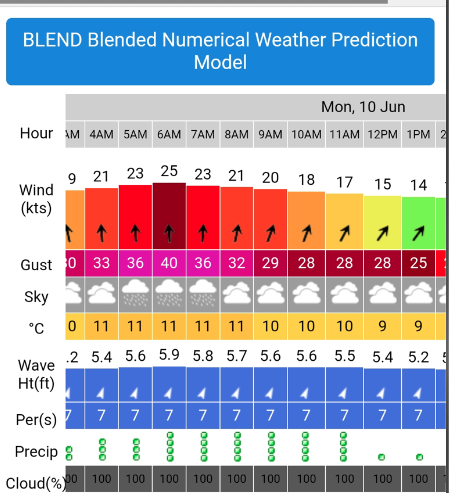
The week leading up to the departure was occupied with prepping the boat and anxiously watching the weather. It is always a bad idea to look at the weather more than a week out. 9.5 times out of 10 it is going to be wrong. That is the challenge of sailing in the North Atlantic. Luckily, as the day approaches, the forecast accuracy improves.
The departure date went from Sunday all the way out to Thursday. Sunday to Wednesday showed winds in the wrong direction, rain, and fog. Not extremely favourable conditions for early season. Water temps were reading between 9C and 12C and surface air temps not too far off that mark. We decided to wait until the sun was shining to make the passage to Sable.

|:—:| | SY Malla motoring out of the Halifax Harbour upon our departure |
The first day of sun for the week was Wednesday. It looked like a spectacular day of sailing. The next day, however, looked like another spectacular day of sailing with 20-25kt southwest winds veering to west late in the day. I have not been on Sable Island in strong winds but I have been on a lot of Nova Scotia beaches in such conditions. The sand blows across the beach in a sand blasting fashion. It is not comfortable. I could only imagine the sand blasting that takes place at Sable in gale force winds. Friday’s forecast was for light west with a possibility of a northerly component, which could pose problems when making landfall. After some deliberation, we elected to set sail on Thursday and depart at 0800.
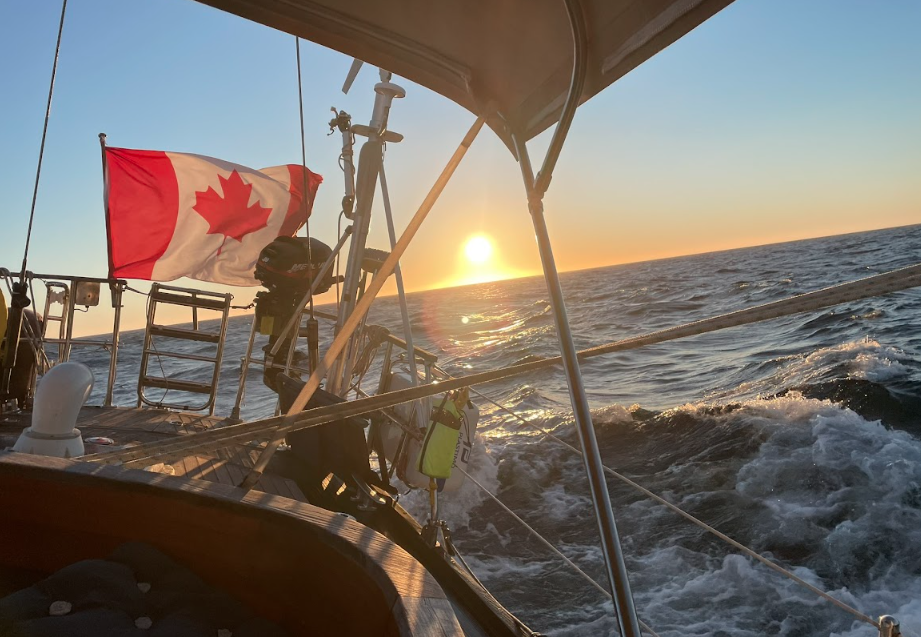
|:—:| | SY Malla sailing through the sunset at 8.5kts. ETA to Sable Island is 3 hours ahead of schedule |
Conditions upon departure had me experiencing deja vu from the same time last year. As we departed the Northwest Arm of the Halifax Harbour we were greeted with 20kt winds from the southwest just as forecast. We set the sails and were sliding along at a comfortable 8.5 knots. We started with a full sails and then later in the morning as the sea state picked up we reefed the main, and then the genoa. A few round ups had us contemplating to set the staysail, but we held out and rode the high seas all the way through the small craft weather warning.
As the sun set, the wind veered west which is directly off the stern on a course from Halifax to Sable. The wind dropped to 8-10kts on the stern which caused for some slower speeds. We flashed the engine to remain on schedule and motored the rest of the way to the Main Station anchorage.

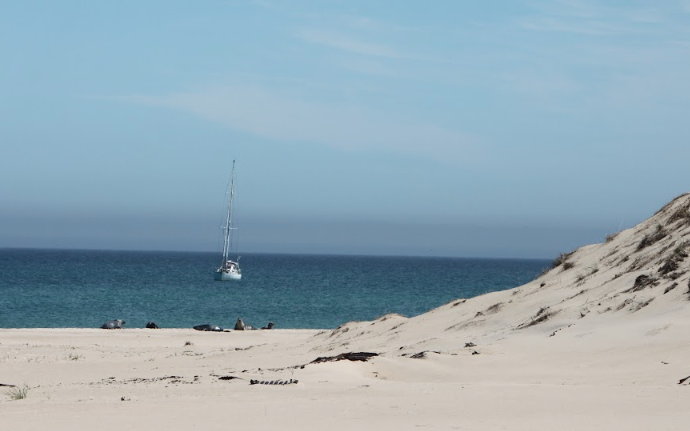
|:—:| | SY Malla anchored at Sable Island off the north beach and the main station awaiting instructions from Parks Canada |
Anchor was set with ease and the wind was light west northwest. I was not 100% sure if we could make a safe landfall with the northerly wind component. I scanned the shoreline with the binoculars and saw only minimal white water. All looked safe from afar.
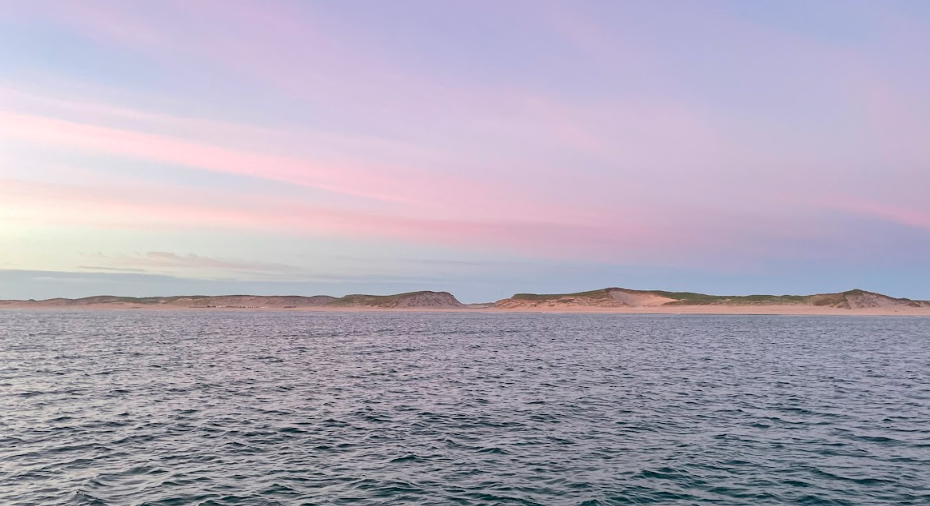
|:—:| | Early morning colours of Sable Island |
We made contact with Parks employee Audrey Levesque at 0800 to arrange for a 0900 beach landing. We dropped the rigid hull inflatable boat (RIB), mounted the 10hp outboard motor, and loaded up our gear for the adventure ahead.
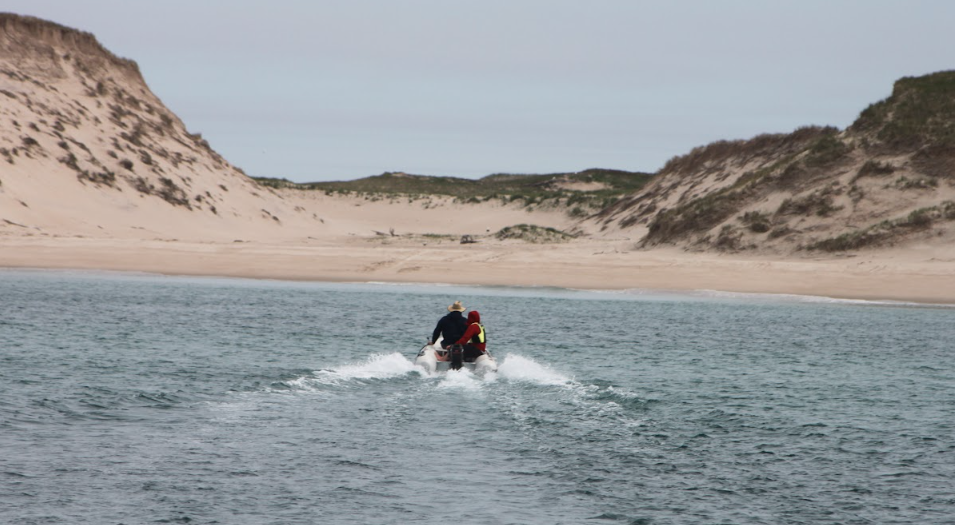
|:—:| | Dave and Andrew making landfall in the RIB |
The landfall went as smooth as it could possibly go and landed on the beach with no issues. Audrey and Parks Canada was there to greet us as we hauled the RIB up out of the tidal zone. Audrey advised us that during her tenure we had just made the fastest passage by sailboat from Halifax that she has seen; 21 hours. It was a good omen for Malla’s first voyage to Sable Island.
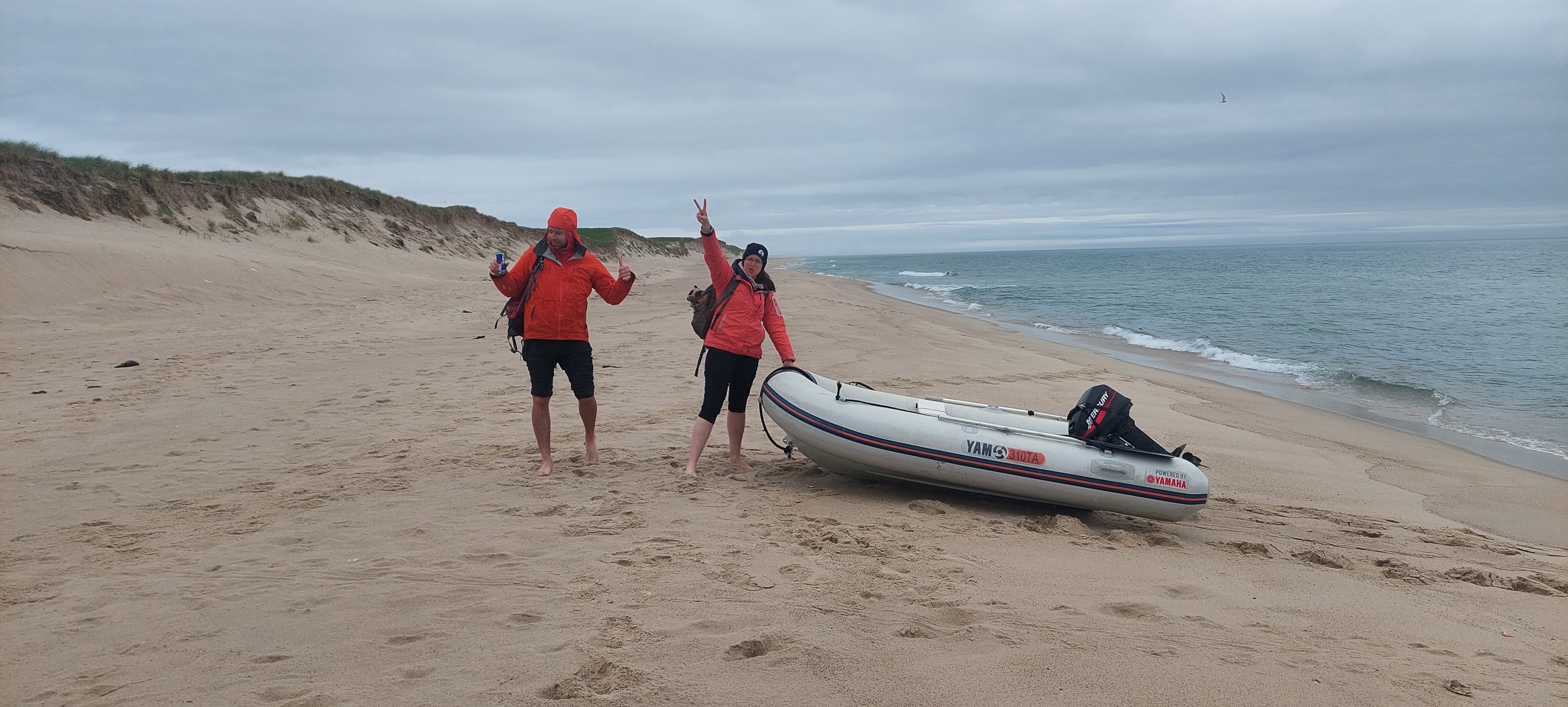
|:—:| | Leslie and Dave stoked to be on the island for the first time |
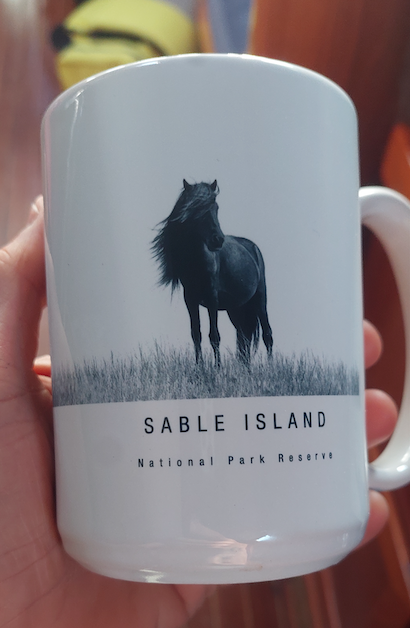
The Parks Canada staff packed us up into a Jeep and drove us through the dunes to the main station. We were able to purchase some Sable Island swag which is exclusive and only available on the island. That makes it special every time I take a sip out of my Sable Island mug!
At the main station, there was a display case that housed many artifacts and bones found around the island. The walrus skull definitely caught my eye. Unfortunately, they are long extinct to the area. The walruses used to have a breeding colony here, but there were hunted to extinction 300 years ago for their ivory and meat. The population between Sable Island, PEI, the Magdalenes, and the Gulf islands was over 100 000.
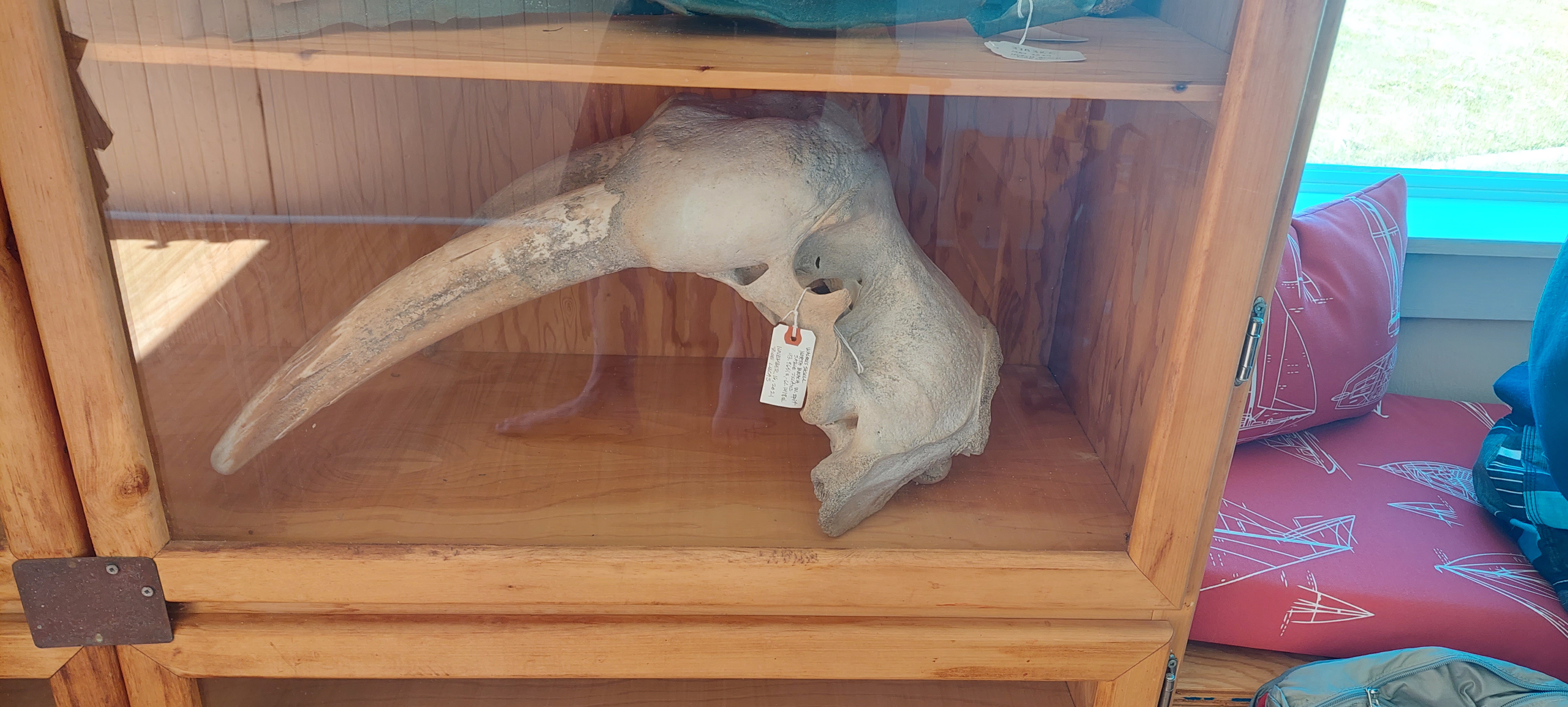
|:—:| | Walrus skull found on the North Beach in 2021. Heavy exploitation throughout the 1600s and 1700s resulted in the extirpation of Walrus from the Sable Island area by the end of the 18th century. A substantial Walrus fishery existed at Sable Island at least until the mid-1600s. |
After our visit to the main station Parks employee, Audrey, showed us around the main station for a couple hours showing us all the hot spots and getting us acquainted with the island and its flora and fauna.
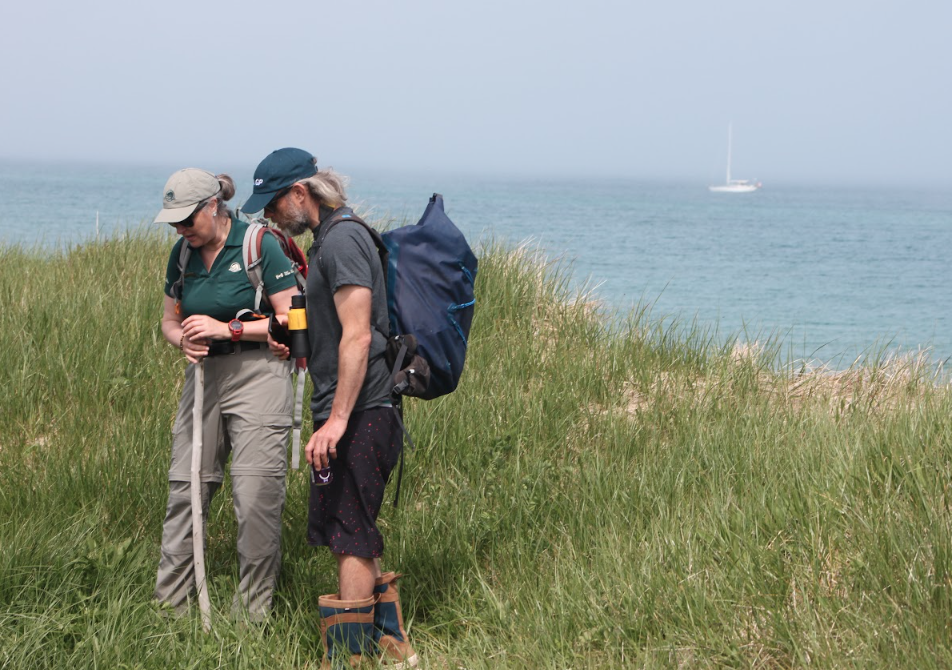
|:—:| | Audrey describing the varieties of flora on the island |
One of the first spots any visitor will check out is “Shanghri La” which is a grassy fresh water pond area where you are almost guaranteed to see horses.
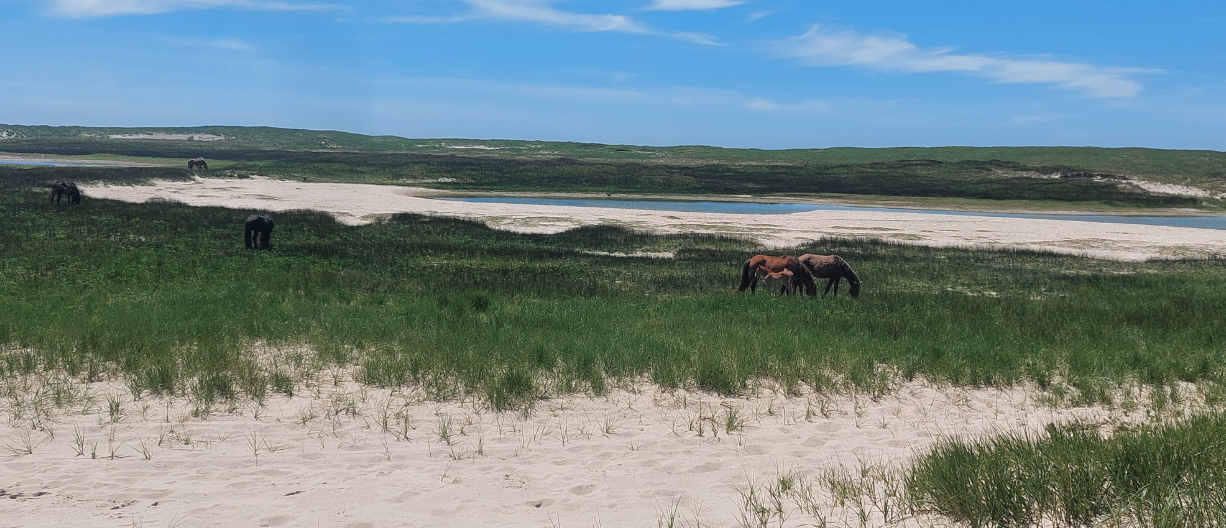
|:—:| | Western band of horses at Shanghri La |
After we explored around the main station we had some lunch in the sun on the dune above Shanghri La and then made our way back to the boat to wiegh anchor and sail further east down the island to Bald Dune. We were underway for about an hour before it was time to set anchor again. We made landfall flawlessly (thanks to the southerly winds and swell) for the second time and embarked on our hike up to the dune. We encountered horses here as well.
Something I found very interesting on the island is that the eastern horse bands do not interact with the western bands. I felt priviledged to be able to see the eastern horse bands as most visitors only see the western bands. It is something unique about visiting the island via boat in that you can see the whole island and multiple horse bands during your visit.
The horses were about a kilometer down the beach when we made landfall and they quickly picked up a trot to come visit us. We stepped back as they approached as its required to stay further than 20m from them. They were very interested in us and continued to look at us in awe, just as we did them. Not many visitors come to this part of the island so I can expect they have not seen very many, if any, humans.
After our encounter with the horses we hiked Bald Dune to the highest point on the island. A spectacular location. We could see almost to the end of both sides of the island. As we were walking up it felt like walking in the high alpine, or I suppose a desert. I have more experience in the high alpine than the desert so that is what I compared it with. All sand and no grass or trees as reference points. I loved the experience. The 360 views from the top were unreal!
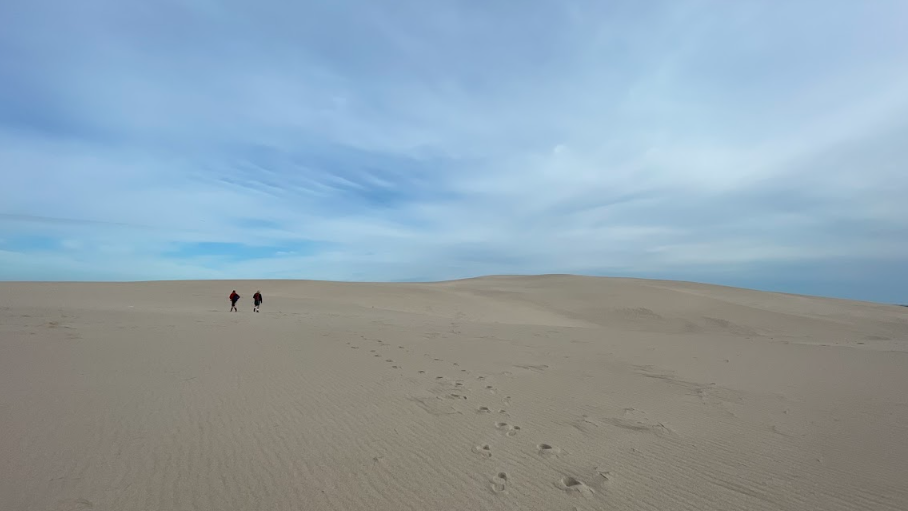
|:—:| | Andrew and Dave hiking up Bald Dune |
After hiking down from the dune we made our way back to the boat. On the way we saw a large band of horses running down the beach near a pack of seals. One of the many special things about Sable Island is how the land animals all live in peace with one another. There are no predators on the island (the sea, of course, is another story). The horses, seals, and birds just do their own thing. The look and observe one another with a level of respect and calmness that is not noticed on the mainland. They walk, fly, and shuffle by one another without making any fuss. I can imagine they enjoy seeing one another as neighbors and friends which, for the horses at least, helps them stave off a sort of loneliness on the island.
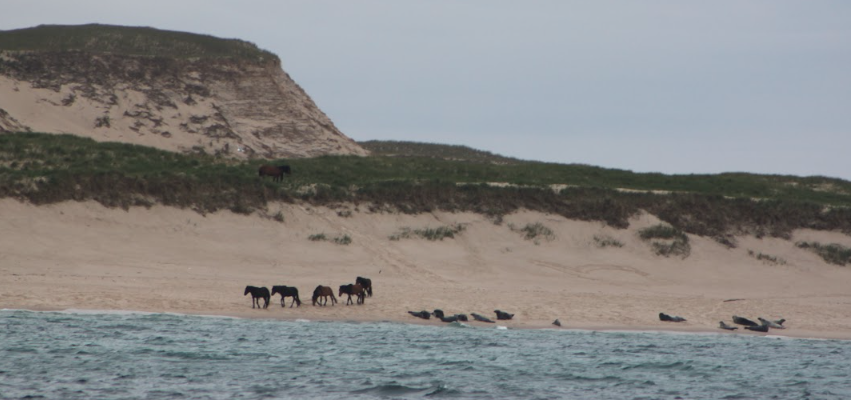
|:—:| | Wild horses and seals living in harmony |
We did witness some horses tustle (this makes for some good photos!), and I’m sure the seals have a bit of infighting as well, but did not see it. As we were departing the island before our first night, we saw a band of horses with a few males having some fun, or a fight. It was magical to see them sprinting down the north beach.
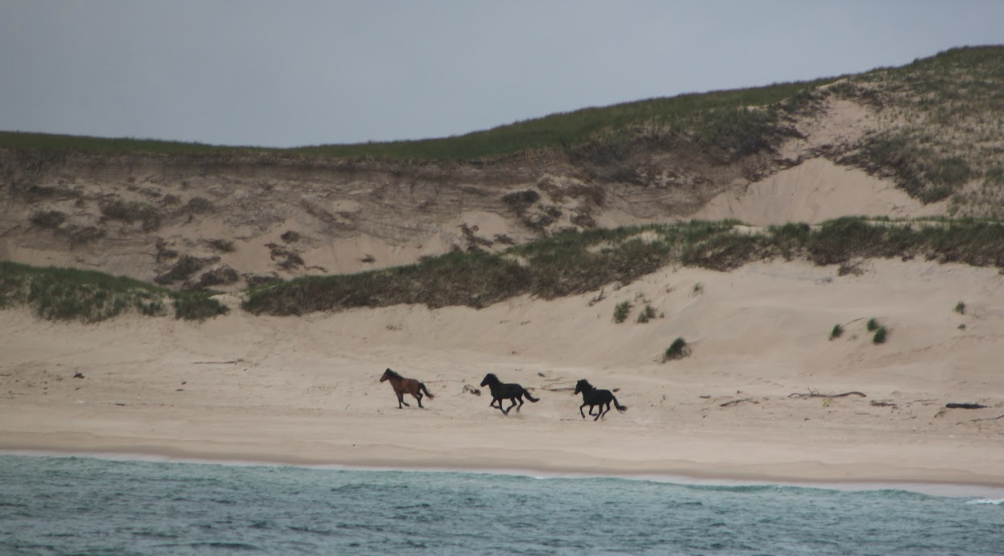
|:—:| | An Eastern band of horses playfully running down the beach after a short tustle |
We were prepared to leave after one day on the island but instead stayed on anchor for the night as the conditions were perfect. A light south wind with no swell made for a comfortable night on anchor. I was surprised as it was one of my first well open roadsteads, or actually completely open ocean anchorages and it was very pleasant. After an epic taco dinner, we had a celebratory drink and hit the bunks just after sundown. What a perfect day!
The next morning we awoke to a wet day. The wind was forecast to turn north later in the afternoon so it was the day to depart. A north wind would create a lee shore, chop, and swell that are dangerous and uncomfortable on the north side of the island. Before the wind turned we mustered up the motivation to brave the wind and rain and head back to another exploratory mission.
We made landfall near the Skidby shipwreck. The Skidby was a steamship that met her doom on the north sandbanks of Sable in January, 1905. The wreck is underwater about 5-6 feet near the low water mark of the beach. We motored almost over it but the high number of seals kept us away. The seals were very curious of us. We kept our distance.
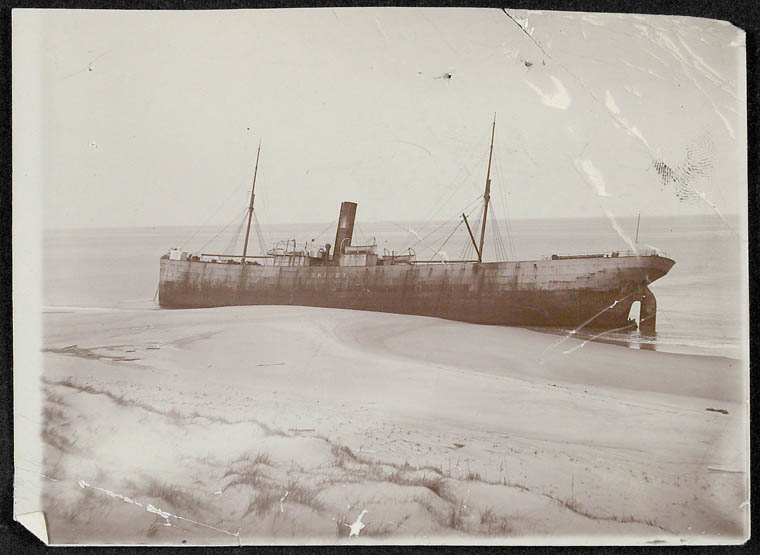
|:—:| | This is the Skidby shipwreck in 1910. Photo from collectionscanada.gc.ca |
With the shifting sand dunes, you will always have a chance to discover some artifact on the island (Note that no one is allowed to take or move any artifacts off the beach). That is what makes coming back here so intriguing. We were on sharp lookout for any anomolies on the beach as we made our way to the latest wreck on the island, the Merrimac, which is a small sailboat that struck the south beach of the island in 1999. The Sable Island map provided by Parks Canada showed the location of the Merrimac so we made our way from the North to the South side. On our way we saw a band of horses so we altered our route to the west to get a closer look. There were some handsome looking horses around grassy mounds. As we were taking some photos I noticed something that looked manmade. As I wandered over I saw immediately that it was the bulkhead of a sailboat buried in the sand. You could see the gunwale with some blue paint, the rail, and a digital course display mounted on the bulkhead. This was for sure the Merrimac however it was quite a bit further west than what was showing on the official Sable Island NPR map. I marked the location on my GPS and advised Parks Canada of the location. They told me that likely we would be the only visitors to that area in 2024 and thanked us for the information.
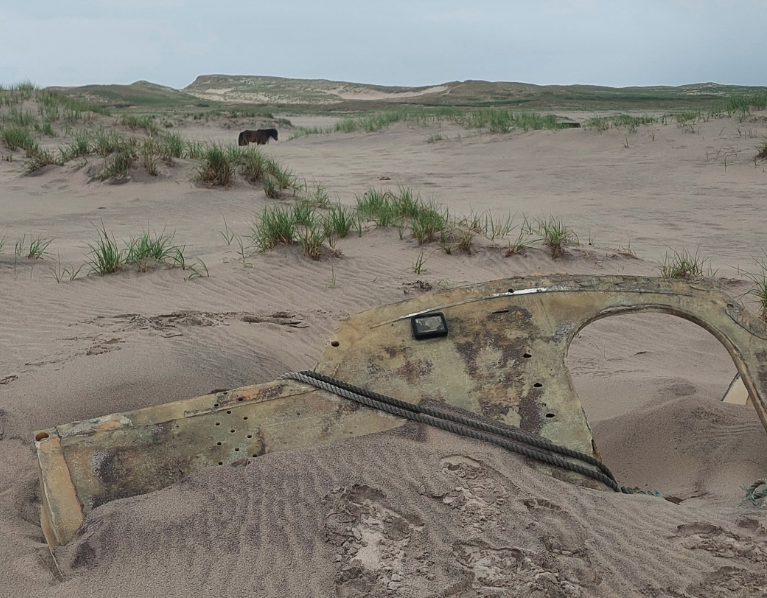
|:—:| | Wreck of the sailing vessel Merrimac. Located west of the official Sable NPR map location in an area of isolated grassy dunes of the south beach |
By this time we were getting quite wet from the rain. We decided to head back to the boat and start our passage back to Halifax by mid-afternoon. We arrived back at the boat just in time for the north wind kick in. It was time to leave. As we weighed anchor we hailed the parks staff on VHF Ch. 8 and advised them of our departure.
As we hoisted the sails, the skies were grey with the sun poking through. We had the heater on to help dry us out. We sat in the main saloon of the boat as we sailed on autopilot back for Halifax joyfuly reminising on the amazing adventure we had just experienced. The 20 more hours of sailing ahead went smoothly and we arrived in Halifax the next day at 1630. Just in time for happy hour.
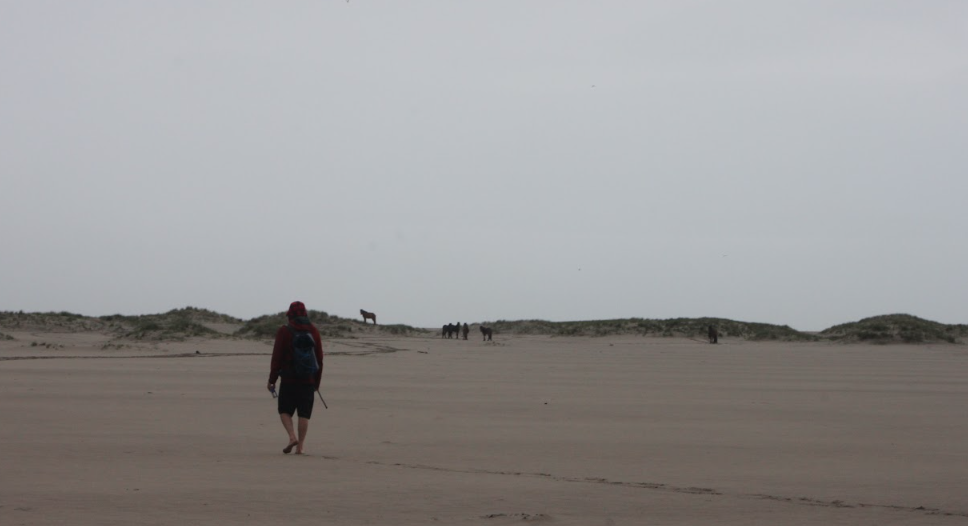
|:—:| | Andrew walking down the expansive South Beach |
Until next adventure - Andrew M. Bruce signing out